
Sustainability Spotlight: Wrangell Mountain Air
Our Sustainability Spotlight series is aimed at broadening the conversation surrounding sustainable tourism for visitors and businesses by sharing the stories of our Adventure Green Alaska certified businesses. To learn more about Adventure Green Alaska certification please visit our about page.
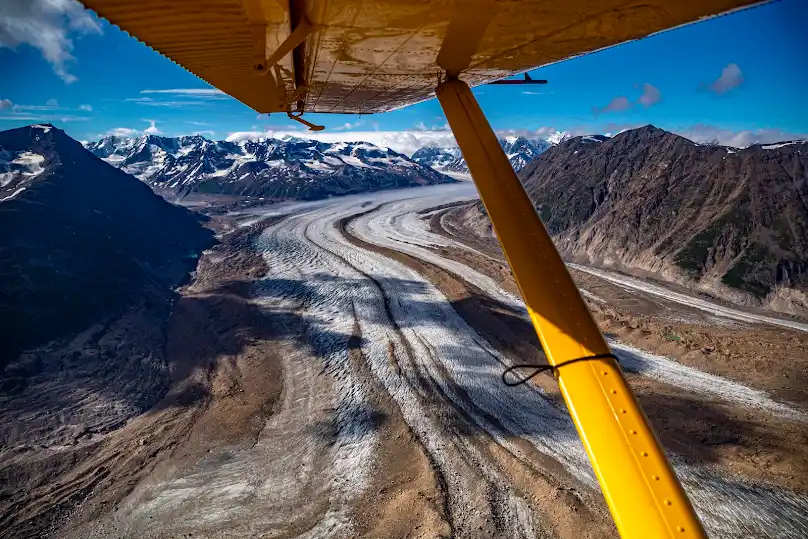
Wrangell Mountain Air was founded by Kelly and Natalie Bay in 1992 as a small but ambitious air taxi service in McCarthy, Alaska—one of the most remote towns in the country, nestled deep inside Wrangell-St. Elias National Park. This is no ordinary park; it’s the largest in the United States, dwarfing Yellowstone, Yosemite, and the entire country of Switzerland combined! From the beginning, their mission has been simple: connect people to this vast and wild landscape in a way that’s safe, responsible, and awe-inspiring.
Their services range from daily flights between Chitina and McCarthy, helping visitors skip the notorious McCarthy Road, to private charters, backcountry drop-offs, and flightseeing tours over some of the tallest peaks and largest glaciers in North America. In fact Wrangell-St. Elias NP has over 3,100 glaciers, making it the park with the most glaciers in Alaska as well! Over the years, their fleet has grown to include a mix of aircraft suited for both front-country and deep wilderness operations, including Cessna 172, 185, and 206s, a Piper Super Cub, and a DeHavilland Beaver. The original owners have since passed the torch to a new generation of pilots, but they’re still here, still flying, and still very much a part of the Wrangell Mountain Air community.
Sustainability isn’t an afterthought for Wrangell Mountain Air. It’s baked into the reality of operating in McCarthy. This has always been an off-the-grid community, which means every watt of electricity they use, they have to generate themselves. Solar panels power much of their operation, but on cloudy days, they’re hyper-aware of how much energy they are consuming, so as not to rely heavily on generators. Water is another limited resource; they pump and haul it from Clear Creek, which makes conservation a daily habit rather than an abstract goal. Waste management is another challenge. They’re responsible for hauling all of their organization’s waste on an eight-hour drive back to Anchorage for proper disposal. That makes waste reduction a necessity. They prioritize composting, recycling, and eliminating excess wherever possible. Staff not only work there, but most live on-site, so Wrangell Mountain Air organizes bulk grocery runs in combination with their trash hauls to reduce long drives to Anchorage to just once a month. Living communally, they practice sharing resources whenever they can to keep waste minimal. Beyond infrastructure, sustainability informs how they operate in the park itself. They work to minimize environmental impact in their flightseeing and backcountry services, ensuring that visitors experience the grandeur of Wrangell-St. Elias without leaving a lasting footprint.
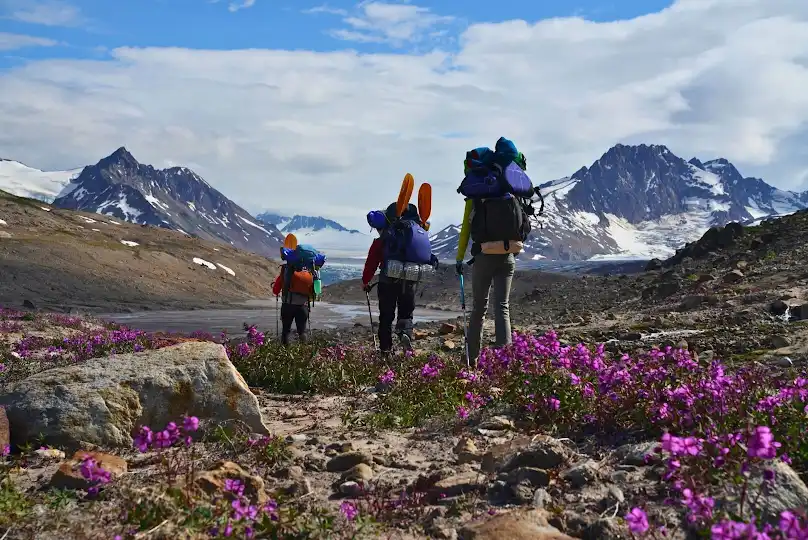
For businesses considering implementing sustainable practices, Wrangell Mountain Air recommends starting with the basics. The first being “reduce, reuse, recycle,” but it isn’t just a catchy phrase, it’s an order of operations. Start with reduction. Where can you use less? Less energy, less waste, fewer single-use materials? Small changes including switching to LED lighting, cutting unnecessary packaging, going paperless, encouraging carpooling add up fast. Only once you’ve minimized waste should you focus on reuse: repurposing materials, finding second (or third) lives for equipment, and encouraging sustainable habits within your team. Recycling is last on the list for a reason; it’s important, but it’s a last resort, not the first step. Sustainability doesn’t have to be overwhelming. Start small, track your progress, and always ask how you can do more and build from there.
A few years ago, one of their pilots, Bill McKinney, posed a challenge: Could they make their flight operations carbon-neutral? It was an ambitious idea, and they started small. First, they crunched the numbers by calculating their carbon emissions per flight hour. The result? Offsetting their flights would cost between $1.75 and $2.75 per hour. Not a huge sum, but a meaningful one.
They began with a tip jar in the office, labeled as a kind of “thank-you to the Earth” fund. Bill, ever dedicated, often donated much of his own tips. Wrangell Mountain Air matched contributions up to $1,500. Then they expanded by offering credit card donations, adding offset contributions to invoices, and this year partnering with travel agents to integrate carbon offsets directly into bookings.
The results have exceeded their expectations. In previous summers, they hustled to meet their fundraising goals. Now, with these new partnerships, they’ve already surpassed their target—and summer is still months away. Even as the average individual donation shrinks, the number of people participating is growing, which is exactly the kind of broad-based engagement they hoped to inspire. Wrangell Mountain Air hopes that getting more people involved will lead to more discussions about what else one can do to make their vacation to Alaska more sustainable.
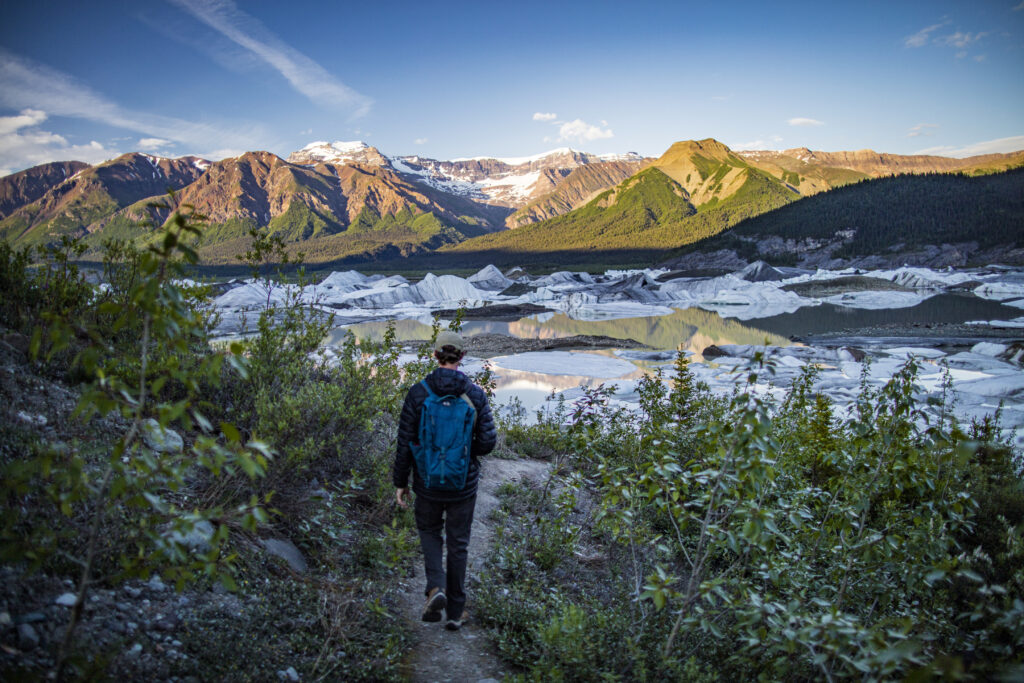
The natural environment defines Wrangell Mountain Air. Their entire business exists because of the natural beauty of Wrangell-St. Elias National Park, and they take that responsibility seriously. They know that flying burns fossil fuels, and they don’t pretend otherwise. They chose to do something about that. Through their carbon offset program, they’ve kept their air operations carbon-neutral. Every flight they operate is an opportunity to educate passengers, not just about the grandeur of the park, but about the very real changes happening here, from retreating glaciers to shifting ecosystems.
To ensure they’re sharing accurate information, their pilots receive annual training from National Park geologists. And because Wrangell-St. Elias doesn’t require backcountry users to attend ranger-led briefings, they step up by educating their clients on Leave No Trace principles and implementing their own internal system to prevent overuse of sensitive areas. They’re not just flying over the park; they’re working to protect it.
Wrangell Mountain Air
Adventure Green Alaska Certified BusinessSustainable tourism isn’t just about minimizing harm; it’s about actively doing good by supporting local economies, educating visitors, and making sure that the landscapes we cherish remain intact for future generations. Adventure Green Alaska is proud to continue to support a business that prioritizes sustainability from a holistic point of view.
To learn more about Wrangell Mountain Air, visit their Green Business profile and their website.